Dollar swing turns into a risk-asset tell, pressuring global stocks and commodity pricing

Currency traders are treating the dollar as a cross-market signal again. Policy expectations and rate differentials are steering FX, while equity risk appetite is amplifying spillovers into commodities and global earnings.
The U.S. dollar’s latest moves are being treated less like a standalone FX story and more like a real-time read on how markets are balancing central-bank divergence with global risk appetite.
A bundled set of FX and central-bank materials hosted via the Federal Reserve ties dollar swings to shifting policy expectations, changes in interest-rate differentials, and the tendency for major pairs such as EUR/USD and USD/JPY to react sharply when equity risk sentiment turns.
Why it matters now is the second-order impact: once the dollar starts moving for policy-path reasons, it can quickly become the day’s “macro multiplier,” influencing how investors price commodities, overseas revenue for multinationals, and the overall tone in global equities.


In FX, the basic mechanism is the rate gap. When markets expect the U.S. policy path to differ from peers, yield differentials can widen or narrow and currencies reprice quickly. But the same sources highlight a second driver that can override clean rate logic in the short run: risk appetite. In “risk-on” stretches, investors may rotate toward higher-beta assets, while in “risk-off” episodes capital can crowd into perceived safe havens—moves that can distort the usual relationship between the dollar and relative yields.
That matters for stocks in two ways. First, currency translation can change how investors think about earnings power for companies with substantial international sales. A stronger dollar can weigh on the dollar value of foreign revenue; a weaker dollar can have the opposite effect. Second, FX can tighten or loosen financial conditions at the margin. A dollar that’s rising on widening rate differentials can effectively reinforce restrictive conditions globally, especially for firms and countries with dollar-linked costs.
The commodity channel is often immediate. Many commodities are priced in dollars, so abrupt dollar strength can act as a headwind by making those goods more expensive in non-dollar terms, while dollar weakness can provide the opposite impulse. Even without a fresh commodity-specific catalyst, a dollar-driven shift in broad financial conditions can change how investors position for inflation sensitivity, cyclicality, and global growth.
ETF flows can also translate the theme into a quick dashboard for non-FX investors. UUP tracks the U.S. dollar, while FXE and FXY provide exposure to the euro and yen. When those instruments move alongside equity benchmarks such as SPY, the market is often telling a single story across asset classes: traders are toggling between “rates mode” (policy expectations and yield gaps) and “risk mode” (equity sentiment), with FX acting as the bridge.
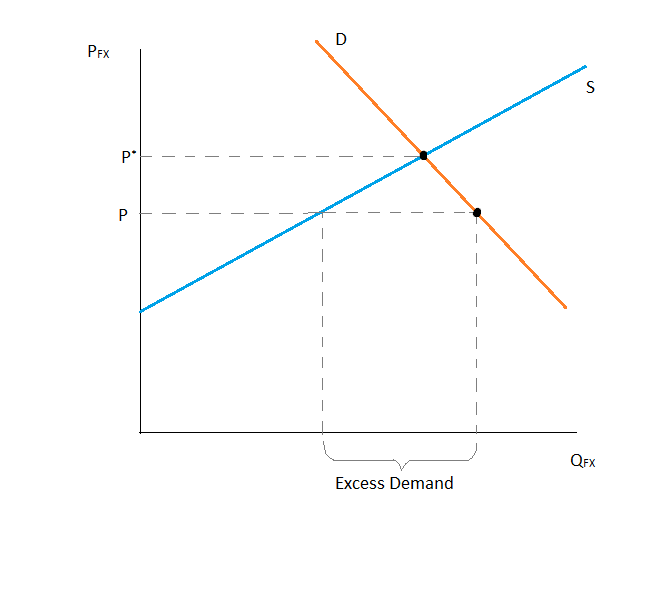

OmniMint interpretation: the key question for the next stretch is not simply whether the dollar is up or down, but what investors believe is driving it. If the market reads the move as policy divergence—rather than a short-lived sentiment swing—spillovers into commodity pricing and multinational earnings sensitivity can become more persistent. If it’s mostly risk appetite, correlations can flip quickly, leaving cross-asset trades more fragile.
Risks to the setup are embedded in the same framework. Small shifts in central-bank expectations can create outsized FX moves when markets are crowded around a single narrative. And because EUR/USD and USD/JPY are flagged as particularly sensitive to both rate differentials and equity mood, they can transmit volatility back into broader risk assets even when the initial trigger is subtle.
What comes next is the market’s ongoing attempt to separate policy signal from sentiment noise. Traders will be watching whether dollar moves stay aligned with changing rate differentials—or whether equities set the tone and FX follows—because that distinction will shape the next ripple into commodities, multinationals, and the overall risk backdrop.
OmniMint uses outside reporting as citation anchors, then adds original market context and workflow analysis from published research data.
- Dollar moves put central-bank divergence and global risk appetite in focus FX and central-bank source bundle - 2026-05-25T14:00:00Z
Source attribution: FX and central-bank source bundle. Source attribution is preserved; this page is published as an OmniMint read.