Musk’s “Terafab” countdown shifts focus to what the market still can’t verify—partners, permits, and chip capacity

A one-line Musk post revived a familiar trade in semis and mega-cap AI: chip supply. With no disclosed partners or timelines, investors are scanning for confirmations that could ripple from TSLA to NVDA, TSM and ASML.
Elon Musk posted a terse update on X—“Terafab Project launches in 7 days”—and, despite the lack of specifics, the message is back on traders’ screens as a near-term catalyst that could steer sentiment across AI semiconductors and Musk-linked execution narratives.
The post, published March 15, did not include details beyond the timing. That brevity is the point for markets: without disclosed partners, site plans, permitting status, funding, or production milestones, investors are left to price not an operating asset but the likelihood of follow-through—and the potential implications for AI-chip supply constraints Musk has previously described across Tesla, SpaceX, and xAI.
From a market perspective, the immediate question isn’t whether “Terafab” is big in concept, but what “launches” actually means in operational terms. Traders typically differentiate between a launch that is mainly a public reveal (branding, a web presence, a project outline) and one that comes with verifiable proof points (named suppliers, signed capacity agreements, location disclosures, or third-party confirmation). The gap between those two interpretations is why the read-through often shows up first in broader AI and semiconductor positioning rather than a clean, model-friendly company event.

.jpg)
For Tesla (TSLA), the relevant channel is execution risk: if chip supply is a gating factor for robotics and autonomy ambitions, investors will look for evidence that bottlenecks are easing—or that they remain binding. A credible step toward securing compute can support confidence in longer-run product roadmaps, while a vague “launch” can just as easily heighten skepticism if it fails to produce concrete disclosures.
For the AI-chip complex, the transmission channel runs through expectations for accelerator demand and manufacturing capacity. If Musk-linked efforts ultimately point to more compute procurement, markets tend to map that onto Nvidia (NVDA) demand sensitivity, with Advanced Micro Devices (AMD) viewed as another lever in the same theme. On the manufacturing side, the conversation naturally pulls in the foundry ecosystem—Taiwan Semiconductor Manufacturing (TSM)—and, by extension, chipmaking equipment exposure such as ASML. Even without new numbers, a high-visibility reminder about compute scarcity can be enough to re-anchor positioning in semiconductor ETFs like SOXX and tech-heavy indexes like QQQ.
Still, the near-term market challenge is verification. A social post can draw attention, but durable repricing generally requires something that reduces uncertainty: named counterparties, a timeline that can be tracked, or supplier commentary that corroborates the scope. In this case, the source context emphasizes that the post itself provided no further information, leaving investors to wait for whatever arrives at the stated seven-day mark.
That setup creates a two-sided risk. On one side is “confirmation risk”: if the launch is accompanied by concrete operational details, traders may treat it as incremental evidence that Musk’s firms are proactively addressing compute constraints. On the other side is “disappointment risk”: if the launch produces little beyond a headline, the market may fade the signal and refocus on established capacity paths in the existing AI supply chain.
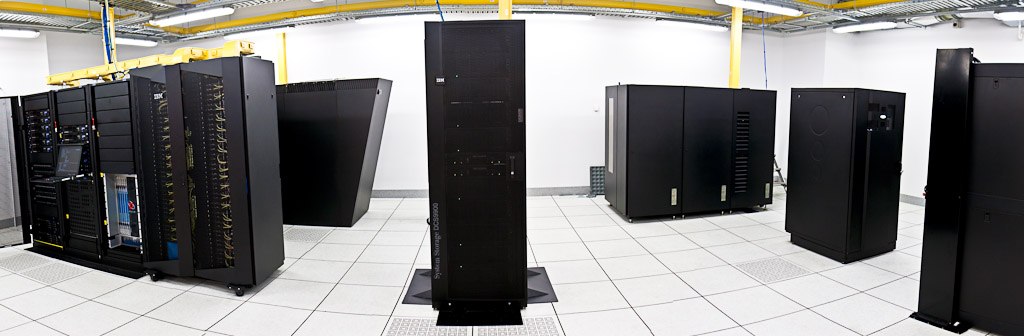

For now, the most actionable takeaway for markets is the checklist implied by what’s missing. Investors will be looking for any follow-through that turns a one-line countdown into a verifiable supply-and-capacity narrative—something that could influence how the market frames demand for AI accelerators, foundry throughput, and the equipment cycle.
OmniMint interpretation: Musk’s post is less a data point about chip production and more a volatility prompt. Until there are confirmable details, price action is likely to express through the broader AI-semiconductor complex and index leadership rather than a single, provable “Terafab” operating milestone.
Source: Elon Musk post on X, with semiconductor-market context referenced by Tom’s Hardware.
OmniMint uses outside reporting as citation anchors, then adds original market context and workflow analysis from published research data.
- Musk's Terafab post puts AI-chip supply and Nvidia demand back in focus Elon Musk X post, with Tom's Hardware source context - 2026-03-15T11:00:00Z
Source attribution: Elon Musk X post, with Tom's Hardware source context. Source attribution is preserved; this page is published as an OmniMint read.