Musk’s “Terafab” countdown shifts the market question to proof points—what, exactly, launches in seven days?

A one-line X post from Elon Musk revived the “Terafab” narrative, but the market reaction now hinges on what can be confirmed: partners, scope, timelines, and any tie-in to AI accelerators and foundry capacity.
Elon Musk put the “Terafab” story back onto traders’ screens with a terse post on X: “Terafab Project launches in 7 days.”
The message, published March 15, included no additional details beyond the timing. That brevity is now central to the market setup: without specifics on what “launches” means—an announcement, a facility milestone, a partnership, or something else—investors are shifting from headline reaction to a verification-driven wait-and-see.
Why it matters for markets is less about what Musk said and more about what has to be confirmed next. In source context around the post, Musk has previously framed chip supply as a constraint across Tesla, SpaceX, and xAI—three efforts closely watched for their potential to consume large amounts of AI compute for robotics, autonomy, and supercomputer buildouts. Any credible signal that materially expands access to compute—or fails to—can ripple across AI-linked equities.
At the moment, the “Terafab” update leaves key questions unanswered: scope, partners, funding, permitting, locations, production timelines, and whether the initiative is meant to touch leading-edge AI accelerators at all. Because those items were not provided in the post, traders are treating the seven-day countdown as a near-dated sentiment catalyst rather than a confirmed change in semiconductor supply.

.jpg)
In OmniMint’s interpretation, that sets up a binary-feeling tape dynamic for parts of the AI complex. If the “launch” comes with verifiable details that connect to chip capacity—particularly anything that implies incremental supply or prioritized access—investors may re-price expectations around Nvidia (NVDA) and other AI-accelerator demand, as well as upstream manufacturing and equipment names. If the “launch” is instead light on operational specifics, the market impact may fade quickly, while leaving the original issue intact: scarcity and competition for AI-grade compute.
The read-through most traders will map is straightforward:
• For Tesla (TSLA), the post revives a familiar execution question: can Musk-linked programs secure enough chips and compute to support ambitious robotics and autonomy targets, or does access remain a bottleneck?
• For Nvidia (NVDA) and AMD (AMD), the discussion tends to route through AI accelerator demand and the broader ordering environment, even if “Terafab” ultimately proves to be more narrative than near-term capacity.
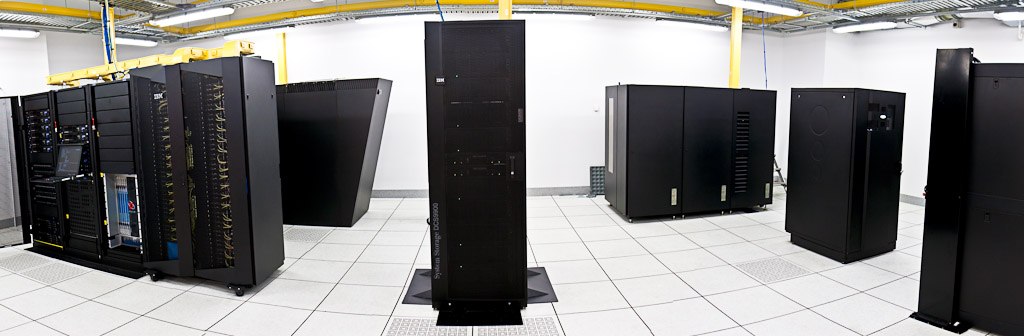

• For foundry and equipment exposure, attention often shifts to whether any new initiative implies additional manufacturing capacity needs. In that frame, investors commonly watch Taiwan Semiconductor Manufacturing (TSM) and lithography supplier ASML (ASML) as bellwethers for upstream constraints.
• For indexes and ETFs, the linkage is sentiment and positioning. Semiconductor ETF SOXX and tech-heavy QQQ can become the liquid vehicles for expressing an “AI capacity” view when the underlying news is ambiguous.
The risks are also clear. With no disclosed milestones, the seven-day clock can amplify uncertainty: optimistic interpretations can run ahead of facts, while skeptics may focus on the lack of disclosed partners or timelines. That gap between narrative and verifiable detail is the main market risk in the immediate window.
What happens next, from a trading perspective, is likely to be driven by confirmable information rather than further speculation: any named counterparties, clear descriptions of what is launching, or concrete indicators of manufacturing or supply arrangements. Absent those, markets may treat the post as another reminder of the same constraint Musk and the AI industry have repeatedly highlighted—chip availability—without assuming a supply-side breakthrough.
OmniMint uses outside reporting as citation anchors, then adds original market context and workflow analysis from published research data.
- Musk's Terafab post puts AI-chip supply and Nvidia demand back in focus Elon Musk X post, with Tom's Hardware source context - 2026-03-15T11:00:00Z
Source attribution: Elon Musk X post, with Tom's Hardware source context. Source attribution is preserved; this page is published as an OmniMint read.