AI data centers meet local limits: water access and permitting pushback become the new gating item

A bundled AI infrastructure and local-permitting source package ties cloud and chip demand to practical constraints: water usage, permit conditions, and community pushback that can slow or reshape large data-center plans.
The AI buildout is keeping investors focused on a constraint that doesn’t show up in chip benchmarks: whether big new data centers can secure water access and clear local permitting without delays.
A bundled set of AI product and infrastructure headlines, captured in an AI infrastructure and local-permitting source package, links cloud spending and data-center demand with the physical footprint of expansion—power constraints, grid strain, and, increasingly, water usage. The same bundle flags permitting scrutiny and community protests or demonstrations as a real-world friction point that can slow projects or force developers to revisit plans, even when demand for AI compute remains strong.
Why it matters now is timing. The market has treated AI as a straightforward capacity story: more servers and accelerators mean more cloud supply and, eventually, more AI services sold. Local processes can turn that story into a scheduling problem, where the gating item is not the availability of chips, but whether permits and operating conditions allow facilities to be built and run at the intended scale.


For markets, the near-term read-through runs across the full AI stack. Nvidia (NVDA) sits at the center of the “picks-and-shovels” trade tied to data-center buildouts, while Microsoft (MSFT), Alphabet (GOOGL), Amazon (AMZN) and Meta (META) are key buyers and operators of the infrastructure needed to train and run AI models. As a basket, the Nasdaq-100 ETF (QQQ) is sensitive to how smoothly that infrastructure pipeline translates into deployable capacity.
Water adds a second layer to the buildout discussion. Data centers can require significant water resources depending on cooling choices and local climate, and the source bundle explicitly connects AI buildouts with water usage and heightened permitting attention. That’s a different kind of risk than the usual concerns about hardware lead times: it can involve public hearings, local political pressure, and permit conditions that are outside a company’s direct control.
Utilities are part of that picture as well. The same source bundle ties AI expansion to power constraints and grid strain, putting utilities and related infrastructure in view alongside the technology names. But the water-and-permitting angle highlights that “more megawatts” isn’t the only approval needed; communities and regulators may scrutinize both energy and water impacts when large campuses are proposed.
From an operational standpoint, the key question becomes how much local friction changes the cadence of deployments. The source bundle does not say any specific project will be halted. Instead, it frames delay or cancellation risk as a possibility for large buildouts when pushback intensifies or permitting becomes more stringent. In market terms, that kind of uncertainty can shift expectations for when demand shows up—potentially changing quarterly ordering patterns for chips, the pace of incremental cloud capacity coming online, and the timeline for new AI product launches that depend on that capacity.
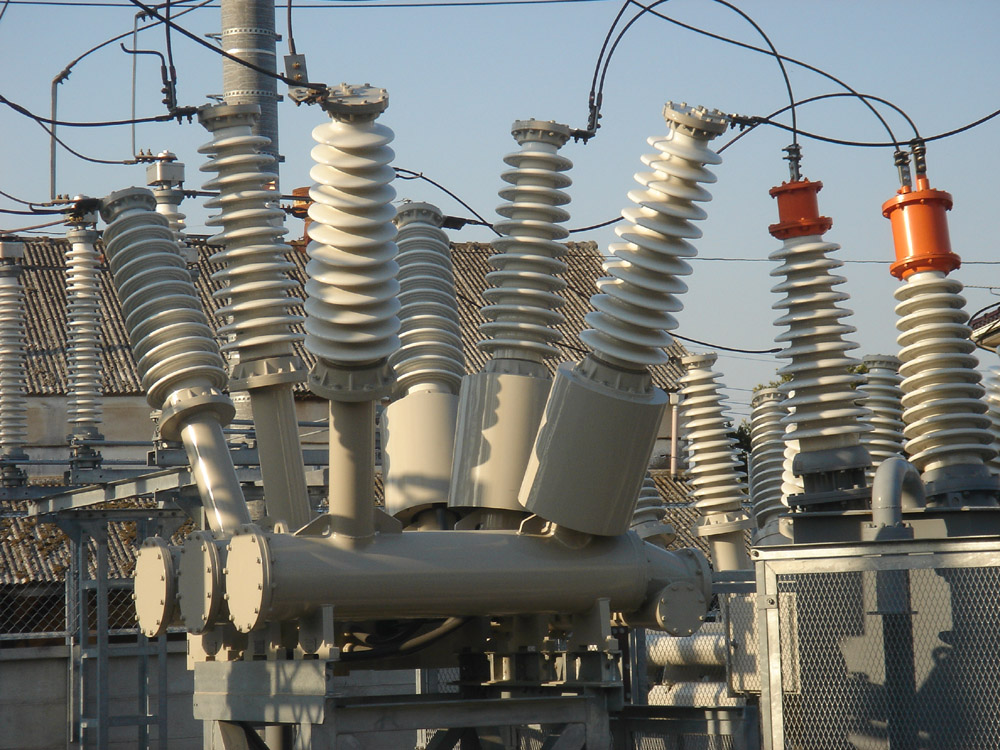

OmniMint interpretation: Wall Street’s AI debate is evolving from “how big is the build?” to “how predictable is the build?” Water availability, permit conditions, and community response introduce schedule risk that can ripple through utilization rates and spending plans, even if long-run demand remains intact. That tends to favor companies with more geographic flexibility and diversified site options—and it puts a premium on clearer disclosures about infrastructure timing.
What comes next will likely be signaled less by model demos and more by process milestones: permitting decisions, public meeting outcomes, and whether communities accept proposed mitigation measures around water and other local resources. Investors will also be watching whether the largest cloud operators can keep AI service rollouts on track if certain locations slow down, and whether utilities can plan for load growth without exacerbating local tensions.
The buildout narrative is still an AI demand story—but the bottlenecks are increasingly local, and that local layer is becoming a market variable in its own right.
OmniMint uses outside reporting as citation anchors, then adds original market context and workflow analysis from published research data.
- AI buildout keeps stocks, cloud demand, power, water, and local pushback in focus AI infrastructure / local permitting source bundle - 2026-05-25T14:00:00Z
Source attribution: AI infrastructure / local permitting source bundle. Source attribution is preserved; this page is published as an OmniMint read.