Dollar’s latest turn ripples beyond FX as traders map policy gaps to stocks and global earnings

Currency markets are treating the dollar as both a rates signal and a risk barometer. That mix matters for equities and global companies, where a stronger or weaker USD can quickly change the market’s growth story.
The U.S. dollar’s latest shift in currency trading is rippling beyond the FX market, putting fresh emphasis on how central-bank policy expectations and global risk appetite can quickly reshape pricing across equities and internationally exposed companies.
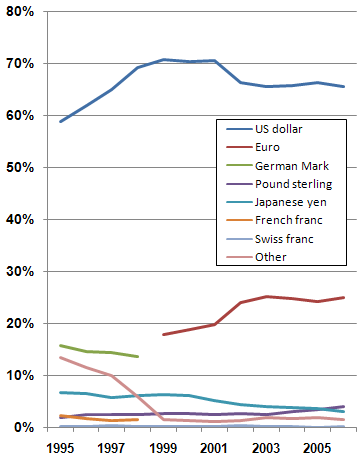
A bundled set of FX and central-bank materials hosted via the Federal Reserve ties recent dollar moves to evolving expectations for major central banks, the rate differentials that follow from those expectations, and the tendency for the yen and euro to react sharply when equity-market risk appetite swings. For investors, the key point is not just where the dollar goes next, but how fast those cross-currents can change the market’s “risk-on/risk-off” posture.
The dollar often functions like a two-in-one indicator. When traders see the Federal Reserve’s policy path diverging from other major central banks, relative yields can tilt in favor of the U.S., and the dollar can act like a rates story. But when equity sentiment turns, the same price action can read as a broader risk mood shift—one that can echo through global stock indices.

That is where the read-through matters for mainstream portfolios. Equity benchmarks such as the SPDR S&P 500 ETF (SPY) can be sensitive to fast currency moves for two reasons. First, a dollar swing can change financial conditions broadly, affecting how markets discount future earnings. Second, the dollar can directly influence how investors think about U.S. multinationals’ overseas revenue: a stronger dollar can reduce the value of foreign-currency sales when translated back into dollars, while a weaker dollar can provide the opposite tailwind.
In practical market terms, traders often express these themes through liquid currency ETFs and the underlying pairs. The Invesco DB US Dollar Index Bullish Fund (UUP) offers a broad dollar proxy, while the euro and yen are often tracked via products such as the Invesco CurrencyShares Euro Trust (FXE) and Invesco CurrencyShares Japanese Yen Trust (FXY). Under the surface, EUR/USD (EURUSD) and USD/JPY (USDJPY) tend to concentrate the debate because they sit at the intersection of policy divergence, rate-gap pricing and shifts in risk appetite.
The knock-on effects can extend to commodities as well, largely through the simple fact that many global commodities are priced in dollars. When the dollar strengthens, it can act as a headwind for dollar-denominated commodity prices in non-U.S. currency terms; when it weakens, it can ease that pressure. Even when supply-and-demand fundamentals are driving commodity markets, a fast FX move can still change the day-to-day tone.


OmniMint interpretation: what’s notable right now is the market’s tendency to “trade the dollar” as an index of macro confidence. When the dollar move is interpreted as a policy-divergence signal, it can reinforce the idea that rate differentials will stay influential. When it is interpreted as a risk signal, it can feed back into equities by tightening or loosening the market’s overall comfort with risk—sometimes quickly.
The main risk for investors watching these cross-asset links is that the causal arrow can flip. Equity sentiment can drive FX in one session; in another, rate expectations can drive FX and then spill into equities. That whipsaw is why the euro and yen can appear unusually sensitive during periods when markets are re-pricing central-bank paths.
What comes next will likely hinge on whether policy expectations continue to diverge across major central banks and whether global equity risk appetite remains steady. In the near term, traders will keep treating EUR/USD and USD/JPY as the primary “message boards” for how the dollar move is being interpreted: as a yield-gap trade, a risk-sentiment trade—or some unstable combination of both.
OmniMint uses outside reporting as citation anchors, then adds original market context and workflow analysis from published research data.
- Dollar moves put central-bank divergence and global risk appetite in focus FX and central-bank source bundle - 2026-05-25T14:00:00Z
Source attribution: FX and central-bank source bundle. Source attribution is preserved; this page is published as an OmniMint read.