Dollar shift spotlights the yield gap trade as markets weigh policy split and risk mood

Dollar price action is refocusing attention on the “yield gap” story: how U.S. policy expectations stack up against other major central banks. That divergence is filtering quickly into EUR/USD, USD/JPY and broader risk assets.
The U.S. dollar’s latest turn is pushing a familiar FX driver back to the front of the screen: the yield gap between the U.S. and its major peers, and what that gap implies about central-bank divergence.
A bundled set of FX and central-bank materials hosted via the Federal Reserve links dollar moves to shifting expectations for policy, the rate differentials those expectations create, and the way major pairs can react quickly when global equity risk appetite changes.
Why it matters now is less about any single currency headline and more about the market’s ranking of “who stays higher for longer.” When traders think U.S. policy will remain tighter than elsewhere, the dollar’s yield advantage tends to show up in broad dollar strength and in sensitive benchmarks like EUR/USD and USD/JPY. When that perception softens—or when risk appetite swings—the same rate-differential logic can run in reverse.

.jpg)
For everyday investors, the transmission channel is straightforward: currency prices don’t move in isolation. They frequently follow the bond market’s view of where short-term interest rates are headed, and they often amplify broader risk-on/risk-off shifts. In practice, that can mean a stronger dollar and weaker counterparts when U.S. yields are seen as relatively more attractive, and a softer dollar when the perceived U.S. advantage narrows.
In the listed-product world, the broad dollar theme can show up in vehicles such as Invesco DB US Dollar Index Bullish Fund (UUP), while euro and yen exposure can be reflected in products like CurrencyShares Euro Trust (FXE) and Invesco CurrencyShares Japanese Yen Trust (FXY). Those products can also serve as a quick read-through on how much of the day’s macro narrative is being expressed through FX rather than through stocks or credit.
The equity link is another reason the FX desk is watching the dollar closely. Global risk appetite can act like a second engine for the same pairs: when investors lean into risk, funding and carry dynamics can shift, and currency moves can precede or reinforce what shows up later in equities. That is why traders often track the dollar alongside equity benchmarks such as the SPDR S&P 500 ETF Trust (SPY), particularly during sessions when macro expectations are doing most of the work.
There is also a real-economy angle. A firmer dollar can matter for U.S.-listed multinationals with overseas revenue, because currency translation can weigh on reported results, while a softer dollar can ease that headwind. Outside the U.S., the same move can affect import costs and inflation sensitivity—inputs that feed back into central-bank expectations, and therefore back into the rate-differential story again.
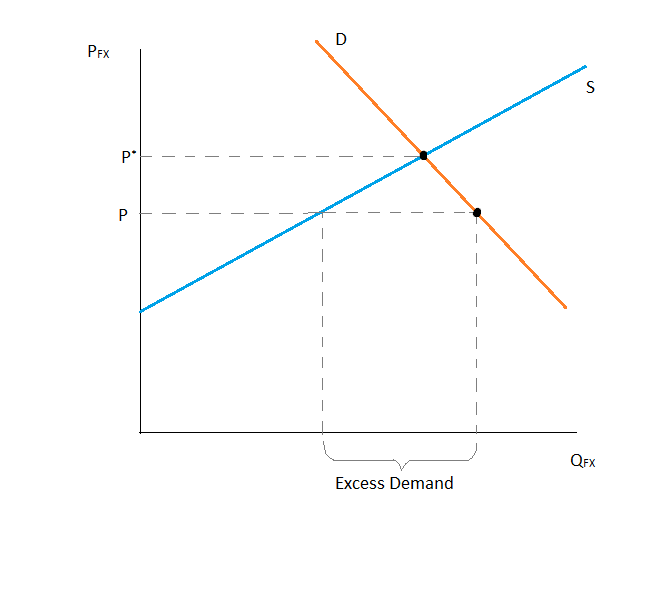

OmniMint interpretation: the market is treating the dollar less like a standalone trade and more like a “macro scoreboard,” where central-bank divergence and risk appetite are being repriced together. That can make FX more reactive than usual to any shift in policy expectations, even when the underlying economic narrative hasn’t changed dramatically.
Key risks to this setup are two-sided. If global equities swing sharply, the risk-appetite channel can overwhelm the rate story in the short run. And if central-bank expectations change quickly, the rate-differential channel can drive abrupt moves in the dollar and in the major pairs, sometimes faster than equity investors can digest.
What comes next for traders is whether the market continues to prioritize relative policy paths—and whether that lens keeps EUR/USD and USD/JPY as the primary pressure points for expressing the view. As long as rate differentials and risk mood are moving targets, the dollar is likely to remain the market’s fastest signal for where macro expectations are landing.
OmniMint uses outside reporting as citation anchors, then adds original market context and workflow analysis from published research data.
- Dollar moves put central-bank divergence and global risk appetite in focus FX and central-bank source bundle - 2026-05-25T14:00:00Z
Source attribution: FX and central-bank source bundle. Source attribution is preserved; this page is published as an OmniMint read.