Dollar swings shift attention to rate gaps as traders balance policy splits and risk mood

Central-bank divergence is back in the driver’s seat for the greenback, but day-to-day risk appetite is shaping how cleanly those yield signals translate into EUR/USD and USD/JPY.
Fresh moves in the U.S. dollar are pulling currency markets back toward a familiar debate: how much of the next swing is driven by central-bank policy expectations and rate differentials, and how much is simply a reflection of global risk appetite.
The latest FX tape is being framed around divergence—investors weighing the implied path for U.S. rates against expectations for other major central banks. In that setup, the dollar tends to trade like a real-time scorecard of relative yields. When the U.S. rate outlook looks comparatively firm, the dollar typically draws support; when the market shifts toward a softer U.S. path, that support can fade quickly.
What’s different in this stretch is how tightly the dollar’s day-to-day direction is being linked to risk sentiment. When equities feel steadier, traders often express rate-differential views more directly through major pairs such as EUR/USD and USD/JPY. When risk appetite turns choppy, the dollar can behave less like a pure rates instrument and more like a broader positioning and safety trade—muddying the message from yields.


Against that backdrop, the euro and yen remain the most sensitive pressure points for the “rates gap” story even when they are not the headline. EUR/USD is frequently used as a clean expression of transatlantic policy expectations, while USD/JPY is highly reactive to perceived differences between U.S. and Japan rate settings. The result is that a change in central-bank expectations can show up quickly in these pairs, and then feed into wider market narratives about growth, inflation, and financial conditions.
For readers outside FX, the dollar’s path matters because of how it transmits into other assets. A stronger dollar can tighten financial conditions at the margin, affecting how global investors price risk. It can also shape the earnings translation picture for U.S. multinationals, where overseas revenue converts back into dollars, and can influence cross-border competitiveness for exporters and importers.
Equity investors often feel these linkages through broad risk appetite (such as moves in global and U.S. equity benchmarks) and through sector-level sensitivity. Companies with large foreign sales footprints can see currency translation headwinds when the dollar rises, while a weaker dollar can have the opposite effect. Meanwhile, rapid FX swings can raise hedging costs and increase uncertainty for corporate treasury teams—even if the underlying business demand picture is unchanged.
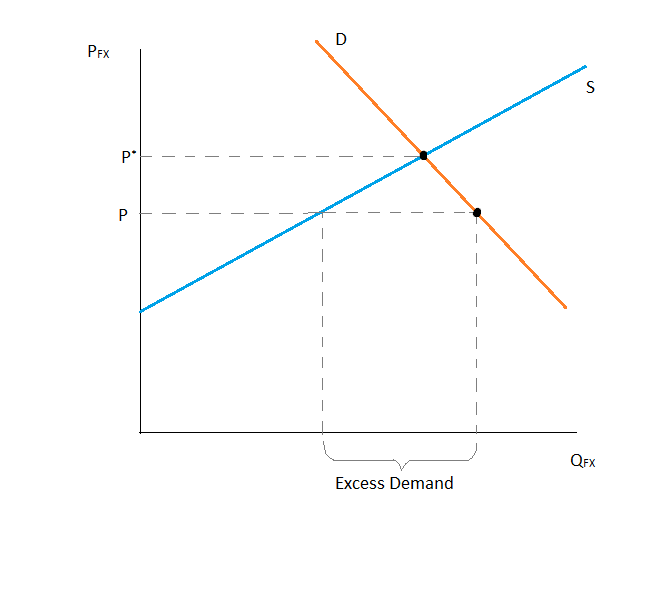

OmniMint interpretation: the market’s key question is whether dollar moves are being “validated” by relative-rate pricing or being driven by shifting risk sentiment. If the move aligns with the direction implied by policy expectations and yield gaps, it can persist and spread across pairs. If it looks more like a risk-on/risk-off churn, reversals can be faster and volatility can stay elevated.
The risk to watch is that policy expectations reprice abruptly. Divergence trades can be crowded, and crowded positioning tends to unwind quickly when the narrative changes. Another risk is that FX sensitivity becomes self-reinforcing: sharp currency moves can affect equity mood, which then feeds back into the dollar, obscuring the original catalyst.
What comes next is the market’s ongoing attempt to map central-bank signals into relative-rate forecasts—while testing how resilient global risk appetite is when the dollar moves decisively. Traders will keep looking for whether EUR/USD and USD/JPY respond primarily to rate differentials, or whether equity sentiment continues to dominate the near-term rhythm.
OmniMint uses outside reporting as citation anchors, then adds original market context and workflow analysis from published research data.
- Dollar moves put central-bank divergence and global risk appetite in focus FX and central-bank source bundle - 2026-05-25T14:00:00Z
Source attribution: FX and central-bank source bundle. Source attribution is preserved; this page is published as an OmniMint read.