Fed-rate expectations pull the dollar and equity leadership back into the same trade
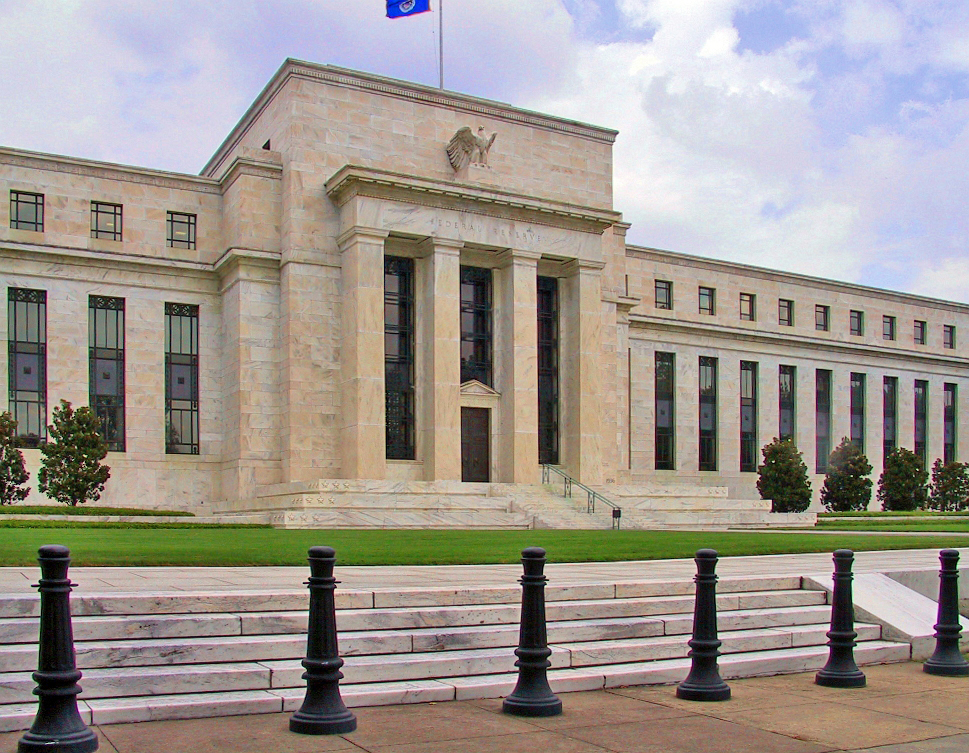
As traders re-check the policy outlook, moves in yields are feeding quickly into the dollar and back into U.S. equity leadership—especially the balance between growth-heavy benchmarks and small-cap risk appetite.
Federal Reserve rate expectations moved back to the top of the macro calendar this week, putting the market’s usual transmission chain—Treasury yields to the U.S. dollar to equity leadership—back in focus.
The setup is familiar but timely: as investors reassess how restrictive policy may feel ahead, even modest changes in inflation expectations and Fed communication can re-price yields, which then ripple into currency moves and the relative performance of rate-sensitive parts of the stock market.
In markets, that chain reaction tends to show up first in U.S. Treasurys. Long-duration exposure, often expressed through products like iShares 20+ Year Treasury Bond ETF (TLT), is typically the most sensitive to shifting views on the path of policy and inflation, while intermediate maturities such as iShares 7-10 Year Treasury Bond ETF (IEF) can act as a steadier “baseline” for where investors think policy and growth are heading.
From there, the dollar becomes the next scoreboard. A firmer greenback, often tracked through the Invesco DB US Dollar Index Bullish Fund (UUP), can tighten financial conditions at the margin—especially when markets are already debating whether the Fed will need to keep policy restrictive. A softer dollar can do the opposite, easing pressure and often improving the tone for risk appetite.


That matters for equity leadership because different parts of the market react differently to the same inputs. Growth-heavy indexes such as the Invesco QQQ Trust (QQQ) are generally more sensitive to the level and direction of yields through the valuation channel. Meanwhile, the Russell 2000 small-cap complex, commonly tracked via iShares Russell 2000 ETF (IWM), tends to trade more like a read on domestic growth confidence and funding conditions—two variables that can be influenced by both yields and the dollar.
Broad U.S. equity exposure through the SPDR S&P 500 ETF Trust (SPY) sits between those poles, but leadership beneath the surface can shift quickly when the dollar and rates begin moving together.
OmniMint interpretation: the key question for the next stretch is less “what did the Fed just do” and more “which asset is acting as the constraint.” When yields move but the dollar does not, equities can sometimes absorb the change without a dramatic rotation. When yields and the dollar move in the same direction, the market tends to treat that as a more forceful signal—either reinforcing the idea of tighter conditions (higher yields plus a stronger dollar) or easing conditions (lower yields plus a weaker dollar).


For investors watching the tape, the practical implication is that relative performance between QQQ and IWM can become a quick diagnostic of which narrative is winning: duration-driven growth leadership, or a broader risk-on bid that lifts smaller companies alongside the major indexes.
Risks to that framework remain. Markets can overreact to incremental Fed commentary, and inflation expectations can shift quickly around key economic releases. In addition, trading mechanics can amplify the move when positioning is crowded in one direction—especially in duration-sensitive exposures—making cross-asset signals noisier than usual.
What comes next is straightforward: traders will keep triangulating between the Fed’s messaging, incoming inflation and growth signals on the economic calendar, and the market’s real-time verdict in yields and the dollar. If those two variables keep moving in tandem, equity leadership—between growth-heavy benchmarks and small caps—may remain the clearest place to see the policy debate expressed day to day.
Source: Federal Reserve and related economic calendar bundle (FederalReserve.gov).
OmniMint uses outside reporting as citation anchors, then adds original market context and workflow analysis from published research data.
- Fed-rate expectations put yields and growth-stock leadership back in focus Federal Reserve / economic calendar source bundle - 2026-05-25T14:00:00Z
Source attribution: Federal Reserve / economic calendar source bundle. Source attribution is preserved; this page is published as an OmniMint read.